Raise the efficiency of your charge points with ENIO
ENIO's load management is about getting the most out of your charge points. Besides the power of a single charge point, what matters is how to make the most of the capacity of your whole charging infrastructure — and so to save on connection and grid costs.
Dynamic load management from ENIO
ENIO's load management distributes the available capacity dynamically across the charge points you have. Rather than simply reducing the current at every point equally, it adapts to what users need and what the vehicles can take, through load profiles such as “BALANCED” or “FIRST COME FIRST SERVE”.
A simple example:
A company garage is supplied with 100 kW of capacity by the grid operator. Twenty charge points have been installed for the parking spaces available. There are office staff and field sales staff.
In the morning every space is taken and each car receives 5 kW of charging power, which fills an almost empty battery in about ten hours. After two hours the first four vehicles are full, so from that moment each remaining vehicle receives 6.25 kW. Another two hours later a further six vehicles are full. The remaining ten then receive 10 kW — almost the maximum of 11 kW that most electric vehicles can currently take on AC. By that point those vehicles have already taken at least 23 kWh. In roughly another two and a half hours, six and a half hours in total, every vehicle is fully charged.
With ENIO's load management, employees can also be given roles that include automatic prioritisation. Vehicles belonging to staff who are only briefly in the office can always be charged with priority, while office staff who are normally there for eight hours — and therefore have eight hours of charging time — are charged behind them. That way the available electricity is used as well as it can be.

The conclusion:
Without ENIO's load management you would be forced either to apply for twice the connected load, which would cost considerably more, or to limit the charge points permanently to 5 kW — static load management — with the result that some employees would drive home with a battery only partly charged.
Unlike other hardware makers who also offer load management but simply reduce the available current equally at every charge point, ENIO allows individual users to be prioritised and so to charge faster. At the same time ENIO's load management avoids a problem that equal reduction creates: with several car makers, the session is interrupted when the charging current falls below about 3 kW, because the vehicle needs a certain minimum. Other manufacturers like to call their system “dynamic” because it can work with different amounts of current, but the distribution across the charge points is not in fact dynamic.
Including other consumers and generators
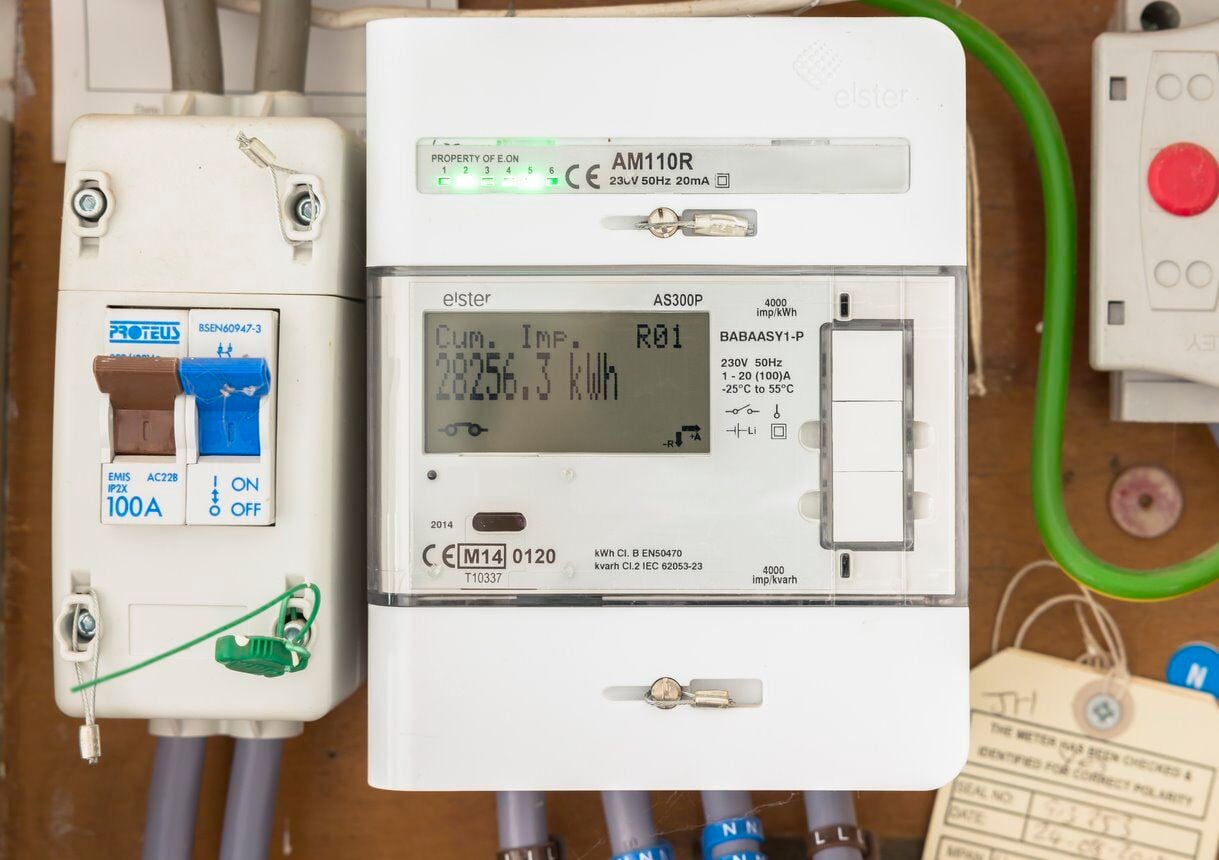
In many cases the available capacity is not reserved for the charge points alone. In manufacturing companies or hotels in particular there are other consumers drawing heavy loads. ENIO's load management can take those into account through a measurement at the root, using a meter of its own. In a hotel, for instance, the kitchen draws 10 kW at lunchtime — in the example above, the maximum capacity for the charge points would be reduced to 90 kW at that moment for that reason alone.
Generators can be included as well. If the hotel has a photovoltaic plant producing 20 kW at midday in sunshine, that electricity can go to the charge points instead of being sold to the energy supplier at a low price.
The ENIO priority button
When things need to move faster, ENIO additionally offers the priority button. It raises the output of a charge point to the maximum, and that vehicle receives full power. The other vehicles get less, but for cars that stand and charge all working day or all night this makes almost no difference, because they are fully charged in that time anyway.
Prioritisation combined with an extra payment:
In a public garage, for example, prioritisation can be tied to an additional payment. If a tenant comes home late and has only a few hours of charging time, they could prioritise the session for an extra fee and receive more charging current than the others. Who may prioritise, how prioritisation works and what it costs are all configured easily in the ENIO backend.
ENIO load management on site or over the air
ENIO's load management is placed directly at the metering point and connected to the individual charge points by LAN cabling. In that case all communication between the charge points and the backend runs exclusively through the load management unit.
Alternatively, an over-the-air version is now available from ENIO, in which the individual charge points connect over LTE. For the root measurement and for the available current, where that is not fixed across the day, ENIO offers an additional meter that reports the available amount to the backend.
What ENIO load management gives you, in brief

- considerably cheaper than buying additional connection capacity
- maximum use of the charging capacity available
- different load profiles configured easily in the backend
- other generators such as photovoltaics or wind can be included
- no shuffling of vehicles — everyone can stay plugged in as long as they like
- prioritising individual user groups is configured easily in the backend
- users can also prioritise manually, for an additional fee if you wish, and charge faster
In short
ENIO's load management is an intelligent way to get the most out of charge points without the high extra cost of a larger grid connection.
Through genuinely dynamic distribution of the available capacity, and by including other consumers and generators such as photovoltaic plants, the infrastructure you already have is used as well as it can be.
The priority function and the priority button in the ENIO app add flexible prioritisation where it is needed, so that individual requirements are met and customers stay satisfied.