
The concept that costs property management nothing
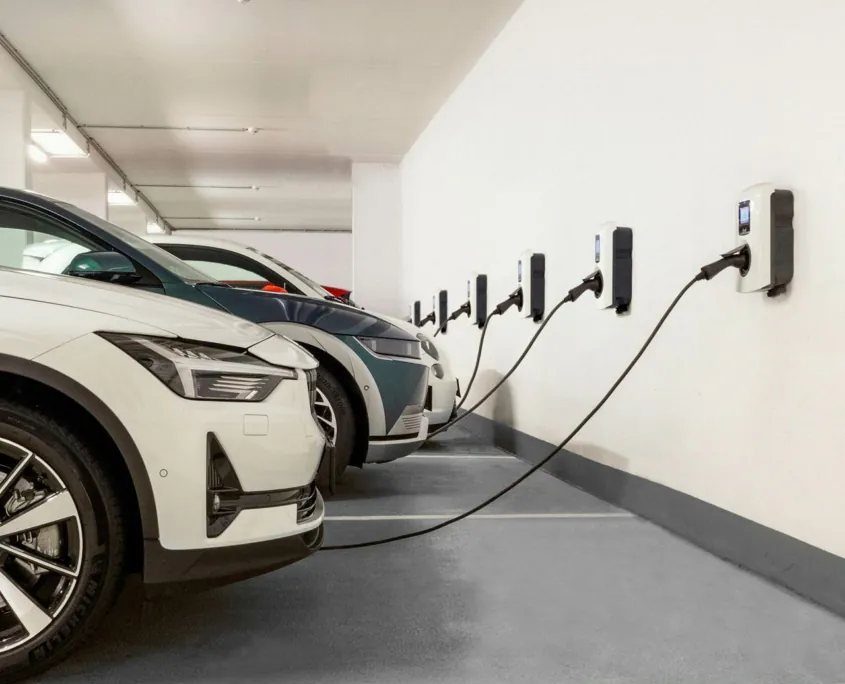
In residential buildings charging rarely fails on technology but on administration: a contract with every tenant, SEPA mandates, dunning, statements. The ENIO concept removes all of it — the card terminal sits at the garage entrance and payment happens at the station.
One dedicated metering point — that is all it takes
The building owner or the owners’ association needs a dedicated metering point for the charging infrastructure. From then on everything runs through ENIO: set the price, install the cable tray, add charge points as demand grows. Every new space is connected without creating a contract.
- No monthly standing fees in the garage model
- Price per kWh freely definable, changeable at any time
- Payment by debit card, credit card or app credit
- No receivables management for the property manager
With or without a monthly fee
Where many individual contracts and cash management would be too costly and the volume is there, the monthly fee can be dropped entirely.
| Item | Option 1 — with monthly fee | Option 2 — no monthly fee |
|---|---|---|
| Monthly fee per charge point | tiered by quantity | none |
| Load management per charge point (optional) | €2.10 | €2.10 |
| Discount fee | 6% of the amount billed | 4 cents per kWh charged |
| Payment routes | all, including roaming | payment station or QR / app credit |
| CPO tenant onboarding | one-off | one-off |
| Configuration per charge point incl. SIM and testing | tiered by quantity | tiered by quantity |
Residential buildings and garages
Do we need a contract with every tenant?
No. That is the core of the concept. Payment happens at the station by card or from app credit. The property manager handles no contracts, no SEPA mandates and no open receivables.
Who sets the charging price?
The owner or the owners’ association — with or without a margin. The price can be changed in the backend at any time. With your own PV system dynamic pricing is also possible.
What if more parking spaces need charge points later?
The cable tray is installed once and further charge points are simply connected. With load management the grid capacity stays the same even as the number of charge points grows.