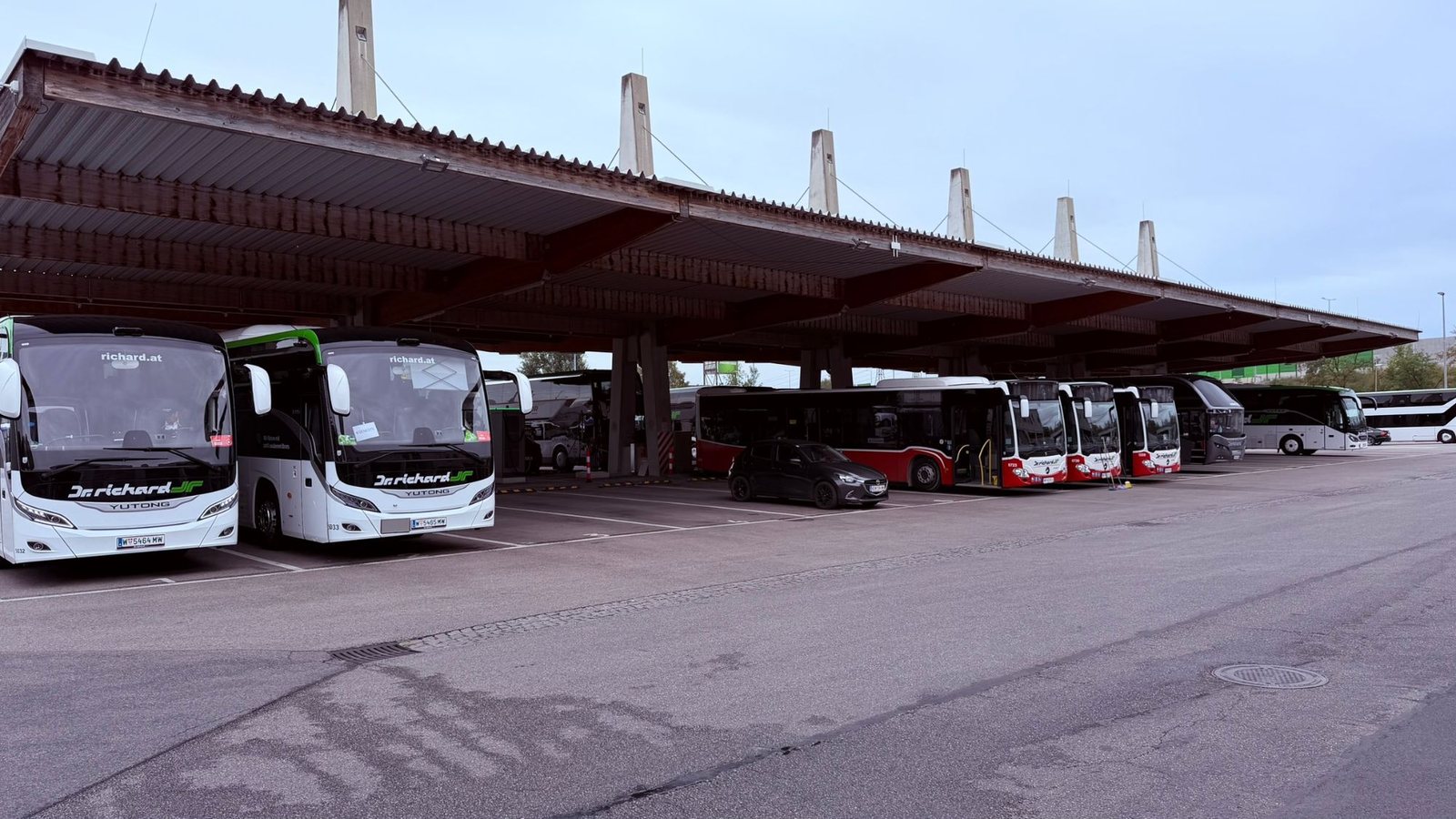
ENIO is a strategic partner of Dr. Richard Reisebus Wien in the field of e-mobility. The collaboration covers the operation of all internal, semi-public and public charge points of Dr. Richard Reisebus Wien as well as the supply of charging infrastructure such as hyperchargers and load management. ENIO thus provides the technical basis that allows one of Austria's most important bus operators to charge, bill, monitor and integrate its electric buses at the Vienna site reliably and within existing operational processes.
For Dr. Richard Reisebus Wien, charging infrastructure is a central element of its own e-mobility strategy. Electric buses can only be deployed economically and operationally if vehicles, charge points, energy, billing, data and route planning work together as one functioning system. This is exactly where ENIO comes in: the company operates the charging infrastructure, handles internal and external billing and makes the relevant operating data available through interfaces. In addition, ENIO distributes the available electricity in a way that avoids load peaks and the extra costs that come with them.
Dr. Richard — one of Austria's most important bus operators
The Dr. Richard Group is one of Austria's leading mobility companies. The family business has been active in passenger transport for more than 90 years and runs scheduled services, coach services and shuttle services. Dr. Richard is regarded as the largest private bus company in the German-speaking region and as one of the largest bus companies in Austria.
With around 1,100 buses, more than 1,900 employees, 15 sites and an annual mileage of roughly 56 million kilometres, Dr. Richard plays a central role in Austrian bus transport. That market position makes the electrification of the fleet particularly relevant. When a company of this size invests in electric buses, charging infrastructure and digital control, the effect reaches beyond individual sites: it shapes the practical development of public transport in Austria.
What ENIO does for Dr. Richard Reisebus Wien
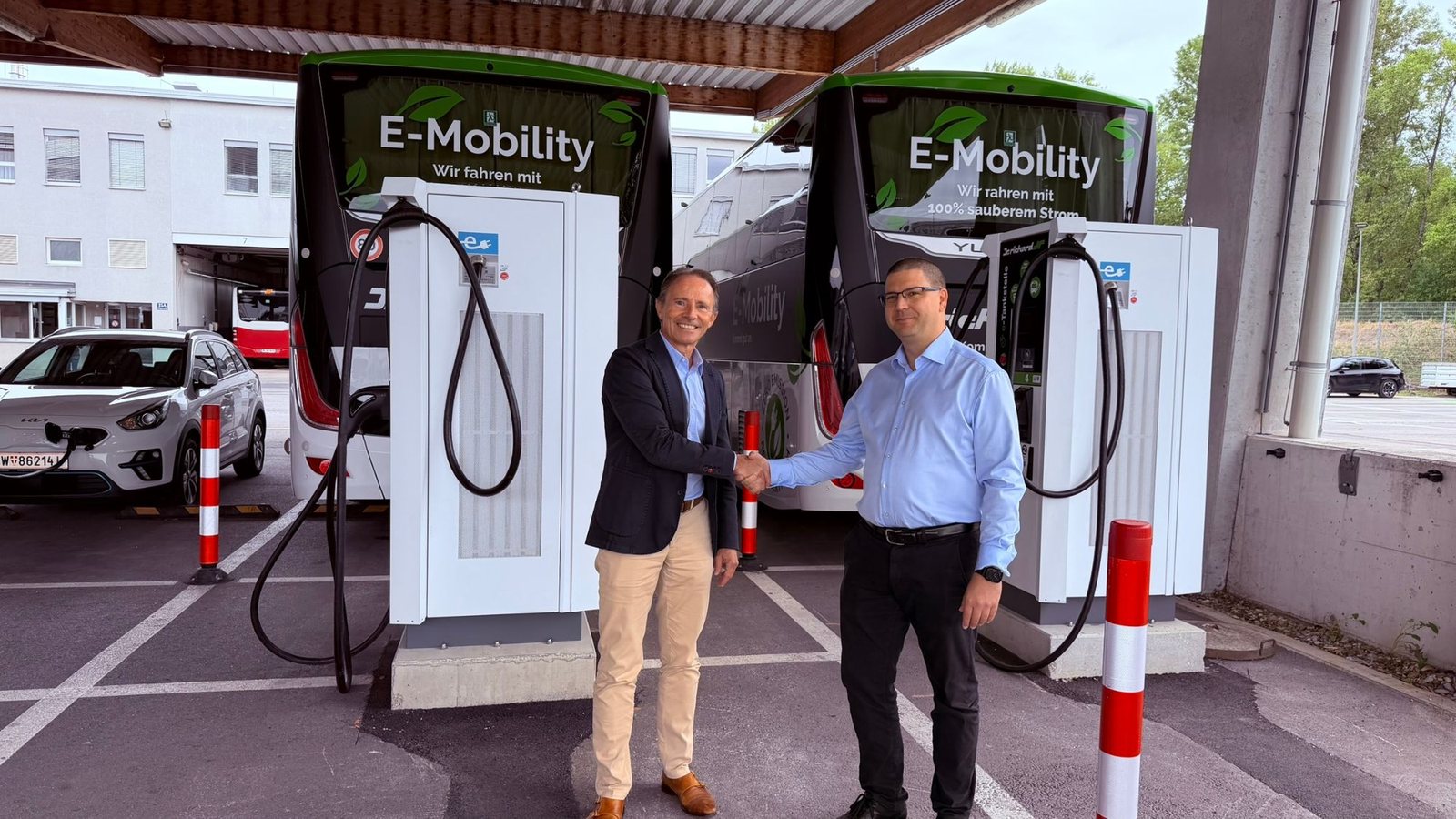
ENIO supplies charging infrastructure and operates all charge points of Dr. Richard Reisebus Wien. These include internal charge points for the company's own bus fleet, semi-public charge points for selected user groups and public charge points for external users.
The advantage for Dr. Richard Reisebus Wien lies in the single technical platform. All relevant charging sessions can be managed, monitored and billed centrally. That reduces complexity and creates transparency across sites, vehicles, user groups and cost centres.
For the charging infrastructure itself, Dr. Richard Reisebus Wien also relies on ENIO's load management to distribute the available electricity optimally across the installed chargers. It takes into account the amount of electricity currently available, which changes continuously because of the large PV systems on site.
Why charging electric buses makes particular demands
Charging electric buses is considerably more demanding than charging individual cars. Buses have larger batteries, fixed deployment schedules, high daily mileage and narrow time windows for charging. An e-bus does not need to be charged at some point — it needs to be charged exactly when the timetable calls for it.
Charge planning, load management, preconditioning and operational reliability are especially important. When several buses are charged at one site at the same time, power requirements run high. Without intelligent control, load peaks can arise that drive up costs and put unnecessary strain on the available grid connection capacity. A professional charging platform therefore has to be able to prioritise which bus is charged when, and how much energy it needs before its next departure.
Winter operation is a practical example. At low temperatures it is not enough for the battery to be fully charged — the bus also has to be heated before it leaves. This preconditioning matters for passenger comfort, battery performance and range. Ideally the heating happens while the bus is still connected to the charging infrastructure, so that the energy required is drawn from the charging infrastructure rather than from the vehicle battery immediately before departure.
For Dr. Richard Reisebus Wien this means that charging infrastructure has to do more than supply electricity. It has to support day-to-day operations, make intelligent use of charging windows, optimise energy costs and ensure that every vehicle is ready on time.
State of charge (SoC) and state of health (SoH) as a basis for better route planning
A further benefit of ENIO lies in making relevant vehicle and charging data available through interfaces. This includes information on the state of charge and the state of health, among other things.
The state of charge shows how full a vehicle's battery currently is. For bus operations this information is particularly important, because it shows whether a vehicle is sufficiently charged for a planned route or whether it needs additional charging before its next departure.
The state of health describes the condition of the battery. This information helps to assess the battery's long-term performance more accurately. For a professional fleet operator such as Dr. Richard Reisebus Wien that is relevant, because battery condition, range, charging behaviour and deployment planning are closely connected.
By making this information available through interfaces, Dr. Richard Reisebus Wien can optimise its own route planning further. Vehicles can be assigned more precisely to particular lines, duty cycles or deployment profiles. A bus with a sufficiently high state of charge and a stable battery condition can be assigned deliberately to longer or more energy-intensive routes. At the same time, vehicles with a lower state of charge or particular charging needs can be identified early and scheduled accordingly.
Night charging, PV electricity and charging infrastructure for truck partners
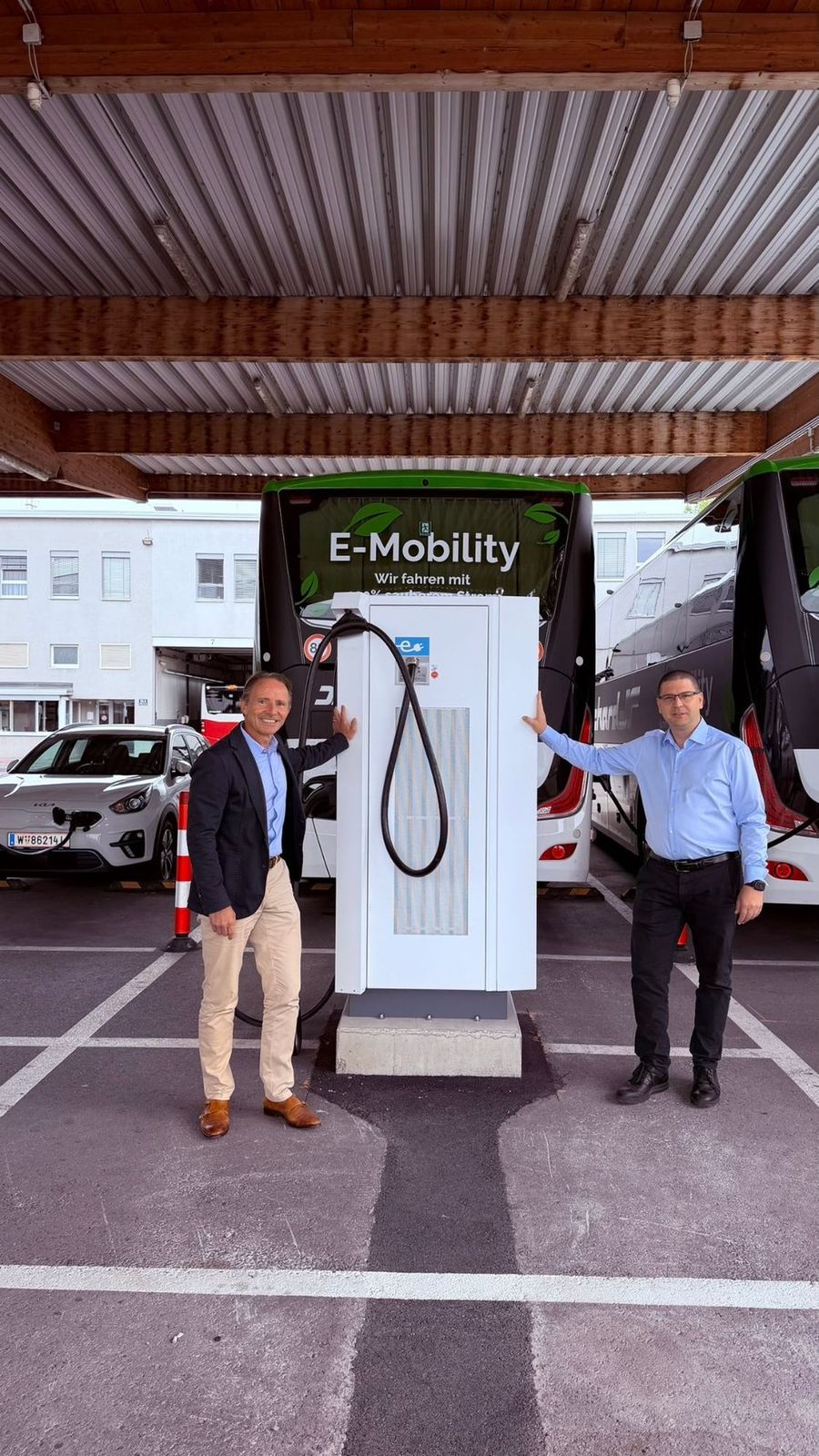
At some sites, Dr. Richard charges its own buses primarily at night. That fits the operating model of many scheduled and coach services, because the vehicles are on the road during the day and parked at the depot at night. During those hours the charging infrastructure can be used specifically to prepare the buses for the next day of operation.
At the same time this creates additional economic value during the day. Charging infrastructure that is needed for buses at night is partly available in daytime. Dr. Richard Reisebus Wien makes this charging infrastructure at its site available to partner companies with trucks on special terms.
The existing infrastructure is therefore better utilised. The company's own bus operation keeps priority, while free charging windows during the day can be put to good use. At individual sites, the company's own PV electricity is also integrated, so that locally generated energy feeds into the charging infrastructure and can be used for buses or electric commercial vehicles.
This model shows how charging infrastructure can be used more economically in professional fleet operations. It serves not only the company's own bus operation, but can also create value for partner companies with electric trucks.
Dr. Richard's e-mobility strategy
Dr. Richard pursues a clear strategy for decarbonising bus transport. The company is electrifying suitable areas of operation step by step, particularly in urban and regional services. At the same time, Dr. Richard is investing in charging infrastructure, alternative drive systems, PV installations and modern operating concepts.
Dr. Richard's e-mobility strategy rests on a practical principle: electric buses have to work in everyday operation. What matters is not only procuring the vehicles, but integrating them fully into ongoing operations. That includes charge planning, energy supply, site infrastructure, billing, maintenance, battery data, range planning and the reliable availability of the vehicles for service.
ENIO supports this strategy as the technical and operational partner for the Dr. Richard Reisebus Wien site. The charging infrastructure is operated centrally, data is made available through interfaces and charging sessions are billed externally. The result is a system that can scale with the growing electric fleet of Dr. Richard Reisebus Wien.
Why the partnership between ENIO and Dr. Richard Reisebus Wien matters
The partnership between ENIO and Dr. Richard Reisebus Wien shows how professional e-mobility in bus transport can be put into practice. Dr. Richard brings the operational experience of a large mobility company. ENIO supplies the technical platform for charge point operation, monitoring, billing, interfaces and scaling at the Dr. Richard Reisebus Wien site.
For public transport this combination is decisive. Electric buses can only be deployed reliably if the charging infrastructure is aligned with the service schedule. Vehicles have to be charged on time, billed correctly internally and scheduled sensibly on the basis of relevant battery data.
ENIO makes these processes controllable for Dr. Richard Reisebus Wien. Charging infrastructure is not treated in isolation, but as part of the entire bus operation. In this way ENIO helps Dr. Richard Reisebus Wien to implement electric mobility reliably, economically and on the basis of data.
Conclusion
ENIO is a strategic e-mobility partner of Dr. Richard Reisebus Wien and operates the company's internal, semi-public and public charge points. The collaboration covers the supply of charging infrastructure and its technical operation, external billing and the provision of relevant data through interfaces.
In bus transport in particular, these services are decisive. Electric buses need dependable charging windows, intelligent load management, preconditioning and precise information about state of charge and battery condition. In winter, a bus has to be not only fully charged but also heated before service begins.
Dr. Richard Reisebus Wien uses the charging infrastructure at its site primarily at night for its own bus fleet. During the day, spare capacity can be made available to partner companies with electric trucks on special terms. Combined with the company's own PV electricity, this creates an intelligent, economical and sustainable concept of use.
The partnership between ENIO and Dr. Richard Reisebus Wien is therefore an example of how e-mobility works in professional fleet operations: reliably, scalably, data-driven and economically sound.