Tax-free for employee and employer
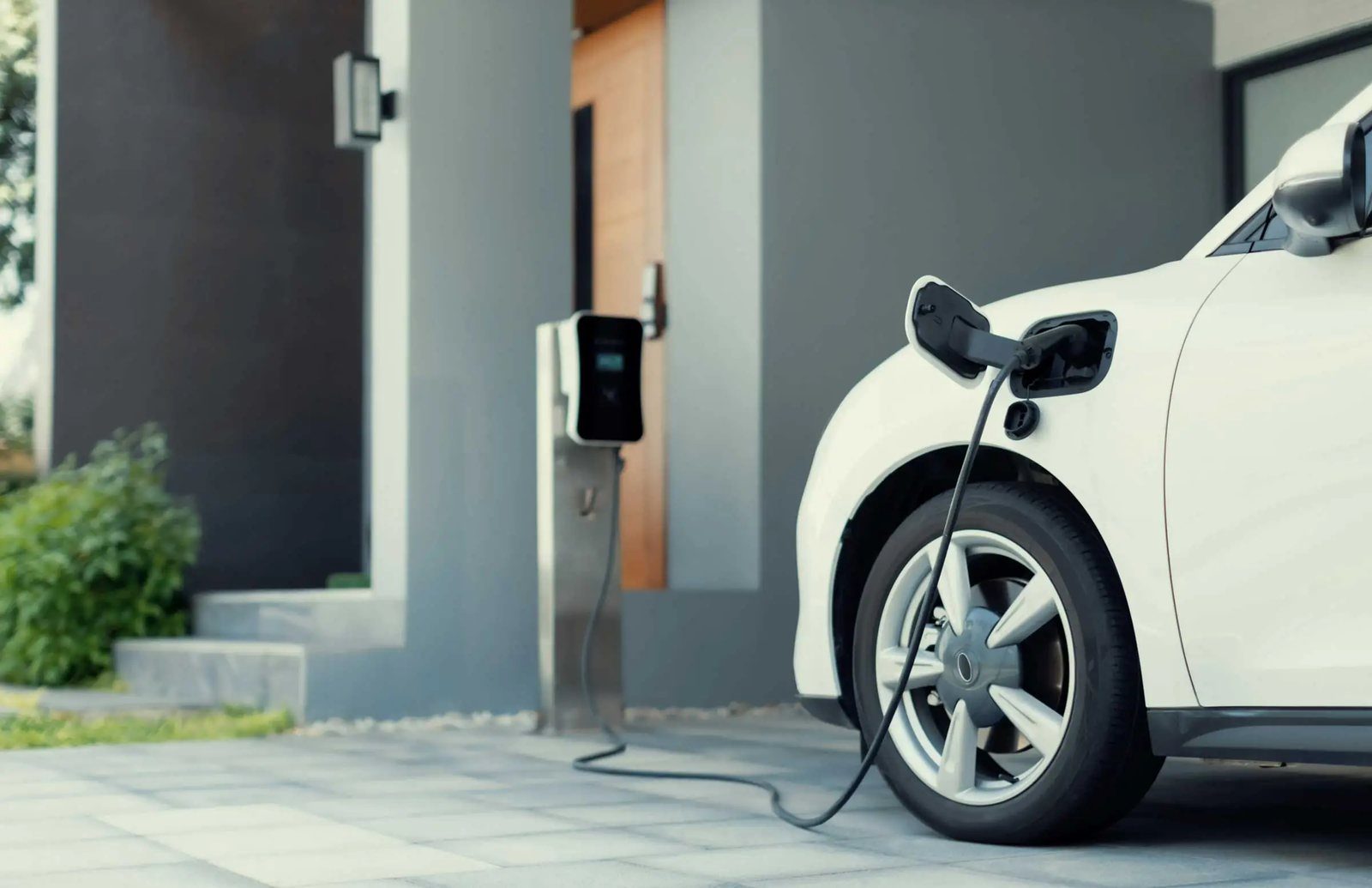
The employee charges the company car at home and the session is transmitted to ENIO automatically. ENIO reimburses the employee for the electricity and re-invoices the company — plus a handling fee. In Austria the rate for 2026 is 32 cents per kWh.
 32 cents per kWh in 2026 — tax-free under Austrian rules
Four steps, with no expense claim
The home charging session is transmitted
Automatically from the wallbox to ENIO, with no action from the employee.
More on thisThe wallbox reports every session to ENIO over OCPP — date, duration and energy. The employee reads nothing off, photographs nothing and enters nothing. Two RFID cards separate private and business charging on the same box.ENIO invoices the company
One statement for all employees, plus a handling fee.
More on thisThe company receives a single invoice for all employees, broken down by person, vehicle and cost centre. No individual receipts, no expense forms, no payroll queries.The employee is reimbursed
ENIO transfers the electricity cost and provides a PDF summary of every settled session.
More on thisIn Austria the tax-free rate for 2026 is 32 cents per kWh — for both sides. Alternatively an individual rate can be stored, for example the employee’s actual energy price from their electricity bill.Everything stays traceable
Employees, sessions and cash flows are visible in the backend and optionally in the app.
More on thisEvery home session sits in the same backend as the sessions on site and on the road. Auditors, finance and fleet see the same list — and the employee sees their own in the app.Why home charging costs the company less
Every kilowatt-hour a company car charges at home costs the employer a fraction of what the same kilowatt-hour costs at a hypercharger. Set your fleet below and the figures follow.
Your assumptions
What the company pays per year
- per car and month—
- per 100 km—
- expense receipts no longer filed—
Private or company — the driver decides
The employee uses two different RFID cards, or the app, to mark whether the session is private or for the company. Charge@Home stations are highlighted only for the assigned user, their own vehicles are preselected and pool vehicles can be chosen.
- Odometer entry at the start of a session, correctable afterwards
- History of every session including odometer reading
- Reimbursement is based on one kWh rate for all employees
- Employees charging free of charge stay in the same system