ENIO — ONE solution for very different circumstances
Around 90 % of companies face a whole set of use cases at once; in most situations, setting up charging infrastructure is about more than charging internally.
Besides internal charging there is public charging and semi-public charging. What those three terms mean goes beyond who may enter the site and who may use the charge points. Here is how ENIO distinguishes them:
Internal charging
 Access and use: charging happens at charge points that are not open to the public but only to particular groups. Private garages, company car parks, charge points in residential buildings or on company premises are typical examples. Only people or vehicles authorised by the operator have access.
- Billing and payment: internal charging usually involves no payment at all, particularly at company charge points for staff or at private ones. There is no complex billing system; in most cases a charge detail record report is enough. Sometimes an RFID card is used to book the session additionally to a cost centre or an internal project.
- Charging power: power is lower here, because the infrastructure is built for longer standing times — mainly 3.7 kW to 22 kW, in garages especially. Rapid chargers are rarer.
- Availability: the charge points are as a rule available to the defined users and maintained by the operator.
Public charging
- Access and use: charging happens at charge points that are open to anyone. They are often found in public places, in car parks, shopping centres or along motorways. Anyone with an electric vehicle can use them, usually for a fee.
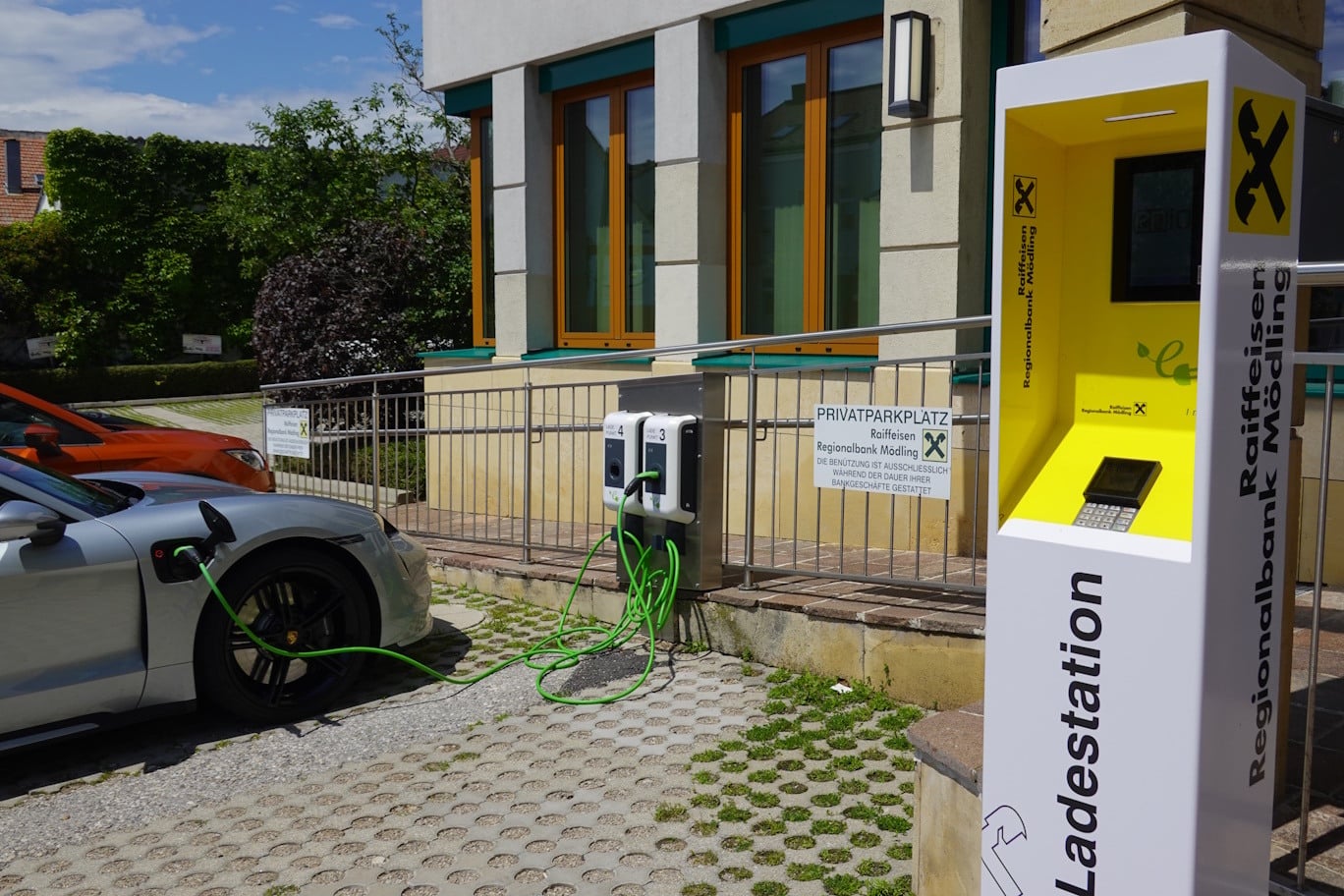
- Billing and payment: a range of payment methods is normally offered, from paying through an app or with an RFID charging card to paying directly by credit card at the ENIO Payment Station. Rates vary by provider and by duration. For many customers it matters that they, as the operator, set the price themselves or can even vary it by time of day. In retail there are companies that offer their customers reduced rates on particular promotion days.
- Charging power: there is a wide range, from ordinary AC charge points at 11 to 22 kW through to DC rapid chargers from 50 kW up to 400 kW today. Charging can therefore be faster or slower depending on need and location.
- How long people stay: charging times are usually shorter here, particularly at rapid chargers. There is an expectation that the space is freed up afterwards to make room for other vehicles. Providers therefore often combine the price per kWh with a blocking fee, to make sure charge points become available again as quickly as possible.
- Access technology: RFID charging cards, RFID chips, apps or a smartphone for scanning a QR code are used for authorisation.
Semi-public charging
- Access and use: these charge points are not entirely open, but they serve a larger group. Examples are charge points at a hotel, a restaurant, a supermarket or a sports club, and also charge points on company premises secured by a barrier. Any guest or customer can charge, but access is limited to certain opening hours or groups. Another case is internal billing between sister companies of a group, so that costs can be assigned correctly.
- Billing and payment: use is often free for certain groups or included in the fee for the main service, a hotel stay for instance. Otherwise RFID charging cards, RFID chips, apps, a smartphone for the QR code or the ENIO Payment Station can be used to pay.
- Charging power: charge points here usually offer medium power, 11 to 22 kW; rapid charging is occasionally used as well, depending on the site and what customers need.
- How long people stay: this varies with how long users are there — hotel guests or restaurant visitors, for example.
- Access technology: mixed forms are common here. Access can also be managed by special codes, hotel cards or apps.
What these three scenarios mean for your company
Most companies take their first step into electric mobility with purely internal charging and, where needed, hand out RFID cards to customers, suppliers and guests so that they can charge. Staff with private electric vehicles are often allowed to charge at a reduced rate.
But purely internal charging has its drawbacks:
- Administrative effort: customers and guests pay nothing for the electricity, and the process around the charging session is laborious. The guest first has to collect an RFID card from reception, then walk back to the vehicle and start the session — and the same happens again on leaving the premises.
- The GHG quota: it cannot be settled properly; only the flat-rate settlement is available, and that is considerably lower.
- Funding: no subsidy is available — while at present around 30 % funding for charging infrastructure can be expected.
- Investment: every cost is a pure investment. Revenue from making your charge points available can mean that the company's usually favourable electricity cost, and the margin possible on selling the charging service, cover not only the charging infrastructure but general facility costs as well.
Here is an overview of the three scenarios once more:
 Internal charging |
 Semi-public charging |
 Public charging |
|
WHO: employees with a company vehicle
|
WHO: employees with a private vehicle, permanent tenants, affiliated companies
|
WHO: customers, suppliers, guests, visitors
|
Charge@Home
Alongside those three use cases, most companies have one more: Charge@Home. Employees are reimbursed for the cost of charging at home, and that reimbursement is tax-free for employee and company up to 33 cents per kWh.
The company gains because the employee charges the company car at home and loses no time to charging on the next working day. That raises productivity, and at the same time day-to-day operation is considerably cheaper than with combustion vehicles.
You can read more about Charge@Home here.
In short
As soon as more than your own company cars are being charged, it is worth thinking about what you want to offer staff, customers and guests with your charging infrastructure.
A decisive advantage of the ENIO solution is that you set the prices for different groups of users yourself. On top of that, ENIO's load management lets you define how much power each group gets.
The income from making your charge points available, the settlement of the GHG quota and the funding available are all worth examining before you decide — we are happy to prepare a return-on-investment calculation for you.